Monday, 21 May 2012

Clicking Joints - Is It Normal?!

Whilst writing this post I've been discussing it with patients and friends and it seems we all have stories about our joints that click! My personal party piece is a clicking temporomandibular (jaw) joint, and in the clinic Physio Rachel has "clicky hips".

www.huntosteo.co.uk ow.ly/b2sFc
If the definition for "normal" is something which the majority of people agree to having, then clicking joints are indeed normal. But what causes them?

Well, there are 3 main theories about the reasons for joints cracking and clunking away. The first is bubbles of nitrogen being present in the fluid inside a joint and smaller "crackles" can sometimes be attributed to this.
Louder "popping" noises are usually due to bones rubbing and sticking together as we begin a movement and then release with a "pop" as the friction is released and the bones move independently.
Take the thigh bone and knee cap (the femur and patella) for example. When you begin to bend your knee, the patella is pulled upwards (within the quadriceps tendon - more about this in a second) in a groove in the femur. It should move smoothly, however it often moves up the side of the groove as the tendon stretches. Then, as the pressure is increased (the further you bend your knee) it "pops" back into place in the groove.

Healthy Knee Joint
www.rghospitalludhiana.com ow.ly/bf8vF
Almost everyone I speak to reports clicking in their neck when they turn their head. This is most likely caused by the same sort of “rub and release” as described in the knee, it’s just that the joints in the neck are much smaller, so the sounds are more crackly than clunky.

Usually no damage is done, and the popping causes no harm whatsoever. It can be a little uncomfortable as the structures are stretched, but unless the muscles are very weak or damaged there is little chance of something like a dislocation occurring.

Repeated clicking can sometimes irritate the joint and in order to provide less friction and more shock absorption, the joint fills with extra fluid. This can be inside the joint capsule itself, or into fluid-filled cushions called bursae. Very occasionally with persistent painful cracking of the knee, your GP or physiotherapist might diagnose chondromalacia (or “runner’s knee”), which is irritation of the cartilage on the underside of the patella.

For those of us who love to crack our knuckles (I have to say I'm not one!) there is a very persistent rumour that this leads to larger joints or arthritis, though this is largely untrue. The name given to this kind of popping joint is usually “fixation”. Here's why...

www.kidzworld.com ow.ly/b2th6
Most of the joints of the body have two congruent parts, and because one fits so well onto the other, it’s possible for them to “stick” together. This usually happens in joints that have not been moved in a while (like the joints in your spine and neck, or your knuckles). When this happens, the fluid in the joint space creates a vacuum and sucks the two congruent parts together (kind of like the vacuum you’d see if you had two panes of glass stuck together with a film of water in between).

The popping sound in this case, and especially with the knuckles, is the vacuum being released.

The last reason for joints clicking is weakness in muscles which can slacken the tension of tendons crossing your joints, or cause the tendon to cross that joint at a slightly different angle. This means that the bones may meet at the joint at a slightly different angle to normal. So for instance, in the shoulder, if you hear a click when you lift your arm, this is probably due to the joint being in a slightly different position to normal to begin with, then clicking into place as you move and the weaker muscles tighten and correct the position.

Professional Kindly Dentist (Doctor) Holding Tooth And Toothbrush Royalty Free Stock Vector Art Illustration
www.istockphoto.com ow.ly/b2tvn
There are obviously a few anomalies with clicking joints too. With regards to the temporomandibular joint, "clicky jaws" are sometimes due to the lower jaw not being far enough forward in the joint.  This can be corrected with a splint but only if the joint is very painful in the first place (in which case, visit your GP or dentist!) 

Clicking thumb joints can sometimes be attributed to a sesamoid bone being present. This is a small bone nestled inside the joint capsule or tendon (interesting fact coming up! The patella, or knee cap, is a sesamoid bone. It is embedded inside the tendon of quadriceps on the front of your thigh). Sesamoid bones are really very rare in thumbs though.  

The upshot here is: unless your joints click persistently with small movements and/or they are painful and swollen, they are probably healthy. And since almost everyone clicks at some point, we must be normal, hurray!

Friday, 27 April 2012

Repetitive Strain Injuries


http://personalinjuryclaims1.co.uk/wp-content/uploads/2011/01/RSI-symptoms.jpg
www2.hull.ac.uk http://goo.gl/v9Lc
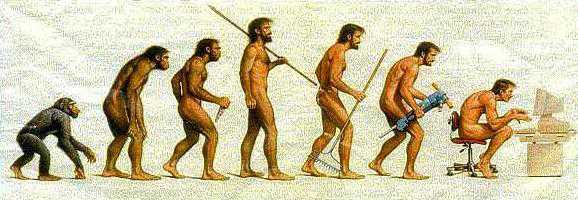
Repetitive strain injuries (or RSIs) are exactly that: strain that is caused by doing something over and over again the same way. It has a lot of other fancy names too (upper limb disorders, occupational overuse syndrome, isometric contraction myopathy - eek!) but for now, we'll stick with RSI since it's descriptive enough.

RSIs are the most common form of work-related injury and can be found in people who work in manual or office based jobs - in other words, pretty much everyone. The muscles of the fingers, wrists, hands, arms and shoulders are the ones we're going to talk about.

Imagine you work at a checkout, and you spend all day sitting down twisting from left to right while you swing shopping across the scanner. This is the definition of repetitive, and you can imagine how tired and sore your back and arms would be. What do you mean, this won't apply to you as you work in an office?

Okay, imagine you work at a desk (I'm guessing this will be a lot easier to imagine for the majority of people reading), and rather than the constant movement from left to right that our checkout worker has, you now seem to be mostly maintaining a static posture, with only your arms moving as you type or write.

Evolution: Somewhere, something went terribly wrong.
sinz.org http://goo.gl/dyljc
Hmm, sounds familiar, doesn't it?

The body is extremely good at protecting and repairing itself, but if we spend hours making the same repetitive movements, this healing is not able to keep up with the small amounts of damage we do over and over again. It may take months or even years for the symptoms to show: these can be a slight ache which develops into pain over time, along with numbness and pins and needles in the upper limbs.

If you are feeling any of these, there are a few things you can do to help:
  • It might sound silly but a warm up and cool down of the muscles used can work wonders - stretching and changing positions through lots of short breaks will really help (e.g. stand up to take a phone call)
  • Make sure your seating position is optimum (see our earlier post on posture) and that you make good use of equipment designed to make your work more comfortable
  • Make sure you have some time to relax throughout the day - there is nothing like a stress-busting few minutes of calm to ease aches and pains
  • A genius, if not very obvious, piece of advice is make sure your clothes fit well so you can move freely (anything that constricts you stops your muscles warming up and makes it difficult to reach for things)
    mildlyfab.com http://goo.gl/r3E9N
  • Speaking of reaching: do have most things within easy reach like the mouse and keyboard
  • If you use the phone a lot throughout the day, do obtain a headset rather than wedging the phone between your ear and shoulder
If the symptoms are worsening, then try to rest the area affected. Painkillers and anti-inflammatories may help, along with heat or cold packs to reduce the sensation of pain.

If you must continue the tasks which cause your pain, you might find supports like wrist splints useful.

Ask a physiotherapist for more advice on pain relief, exercise and how to avoid a recurrence of your symptoms.

Tuesday, 3 April 2012

Referred Pain


www.123rf.com http://goo.gl/a816L


Many of you will have heard of referred pain, especially those who have seen a physiotherapist or their GP about back or neck pain, but what do we mean by "referred pain"? Is it pain that someone else has recommended to me? Pain which is passed on to somewhere else?

Thankfully, not the former. The latter is pretty close.

Referred pain is pain which is felt in a location other than the actual area of injury. So for example, people with sciatica most likely have pinched nerve roots in their lower backs but frequently feel horrible hot or shooting pains in their buttocks and thighs. Sometimes right down into their feet. It's not the thigh, or the foot that is injured, but the nerve itself, which then sends on these "pain" messages along its length (how very kind of it).

Nerves are like the electric wires of our body, and they connect our brain and spinal cord (our central nervous system) to the rest of our body. For instance if you want to wave to Jean over there, your brain will "tell" your hand to move by passing an electric signal down the spinal cord to the shoulder, arm and hand which will then activate your muscles to move.

Similarly, when you touch something cold or hot, or when you hold something solid or soft, your nerves pick up that message and send it up to your brain to interpret the sensation

We covered a fair bit of anatomy in the last post (scroll down to The Demon Back Pain for more information...) so we have a better idea of how the nerves leave the spinal column in neat spaces between the vertebrae. If the spaces become narrow, the nerves are pinched or "impinged". Likewise, the impingement can happen if you have extra tension along the nerve pathway (you see, nerves don't just travel on a path between things to get to their destination, they weave in and out, they branch off and they reach almost every structure in your body).

www.shutterstock.com http://goo.gl/yrBz0

As soon as the nerve picks up this impingement, the messages which it sends to the brain become confused. Instead of a perceiving a pinching at the neck or in the lower back, the electric signals are passed outwards from the spinal column (so into your shoulder or arm, or into your thigh or calf) where they can be misinterpreted as pain, or tingling or even numbness. If the messages being carried back down the nerve to power the muscles are confused, sometimes the problem becomes a weakness in those muscles.

A physiotherapist will determine where the referred pain is coming from as he/she will know which nerves come out from the spinal column in each space and which structures they supply.

Once this has been determined (by testing your sensation and the power of specific muscles) we can use manual therapy to help alleviate the pain, and give you exercises to help widen the spaces and help resolve the impingment. Happy days all round!